

Running and Scheduling
The Scheduled Run step at the top of the graph is the trigger. It shows the cadence, the time, and the timezone the Workflow runs in, along with the date of the next run. Open it to change any of them. The schedule offers None, Hourly, Daily, Weekly, Monthly, and At times. A few details worth knowing:- Daily lets you restrict which days actually run, so weekdays-only is a daily schedule with the weekend deselected.
- Hourly runs on an interval, from every hour up to every 12 hours, on a minute you pick.
- At times runs at several specific times in the same day rather than on an interval.
- None disables the schedule without deleting the Workflow or its history. Run Now still works.
- Times display in your local timezone and are stored converted, so a schedule set in New York does not drift for a teammate in London.
- Schedule changes are not saved until you confirm them.
Run History
The status in the header opens the run history. Each entry shows the outcome, Succeeded, Failed, Partial, or Running, and whether it was scheduled or a manual run, so you can tell an automated result from one someone triggered by hand.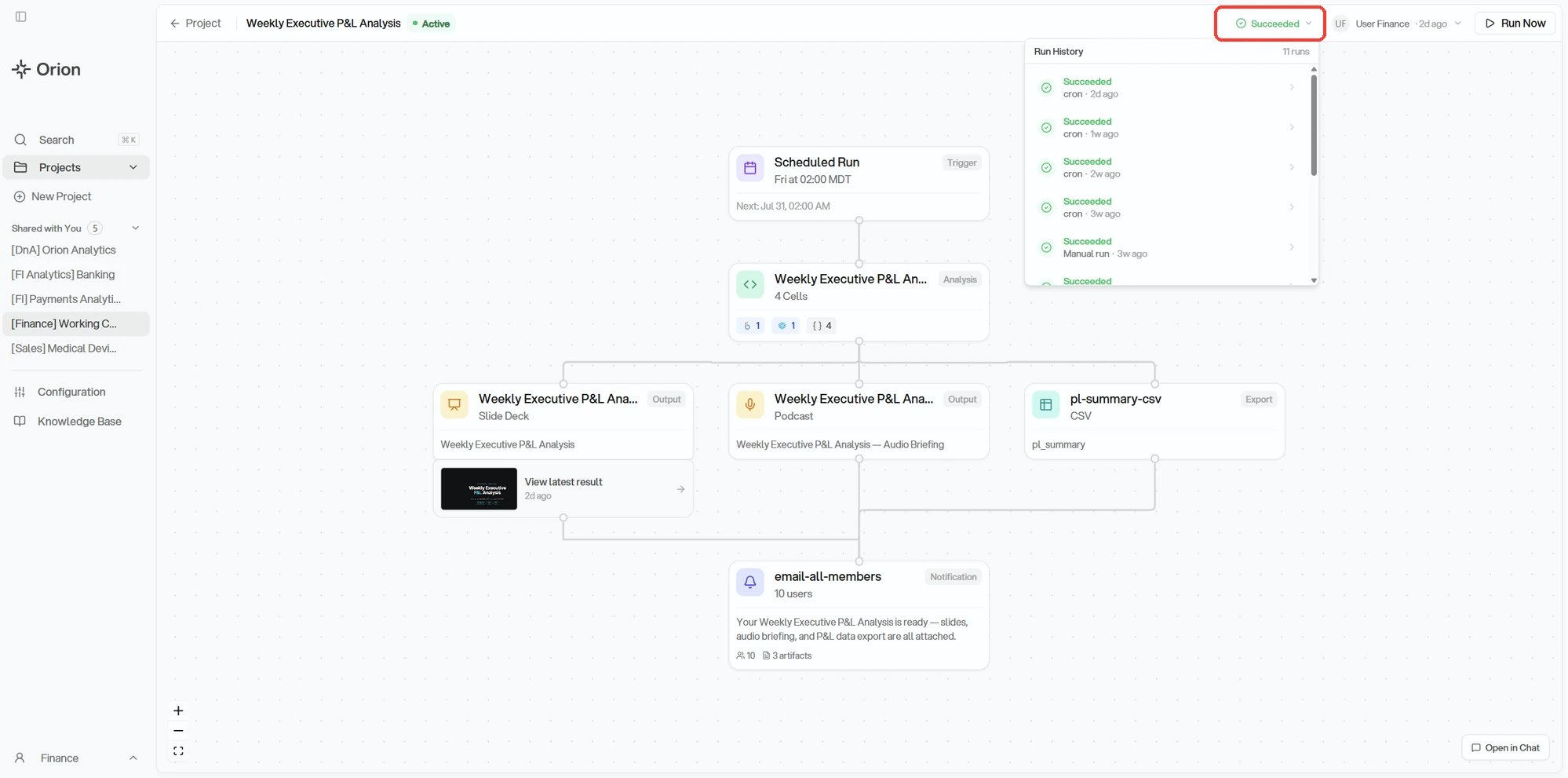
Workflow run history
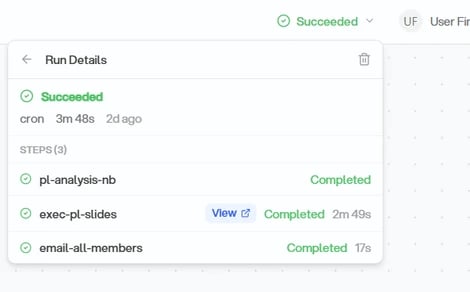
Details for a completed Workflow run
Change History
Run history tells you what the Workflow did. Revision History tells you what people did to it. Every save writes a revision recording who made it, a summary of what changed, and when. Changing a notification’s recipients, switching an output format, or adjusting the schedule each leave a trace. On a Workflow that several people maintain, this is how you answer “why is this suddenly emailing the whole company” without guessing.Editing a Workflow
Click any step to open its configuration. The trigger holds the schedule, each output step holds a format and its latest result, and the notification step holds the message and its recipients. You can add steps too, so a Workflow that only writes a report today can gain a CSV export or a second notification later. The analysis step in the middle is the recipe. It shows the notebook name, how many cells run, and a badge for each kind of data source the cells query, which is the fastest way to see what a run touches without opening the code.In Chat
Some things are easier to describe than to click. Open in Chat, at the bottom right of the graph, drops you into the project chat with the Workflow already referenced and a prompt started for you.
Open a Workflow in Chat
@ and picking the Workflow, the same way you reference a metric or a Context page.
Chat is not only for changes. Referencing a Workflow and asking about it works too: what it queries, why last Tuesday’s run looked different, what would happen if you changed the window to 90 days. You get an answer without editing anything.